4 hr
George Town Food Trail: 15+ Tastings
Dive into Penang's culinary soul with guided tastings at hidden local favorites across old George Town.
Reserve
Hand-picked by our editors — only the best 5 experiences from 47 reviewed.
Verified partners for every tour, free cancellation where available, and instant confirmation on every booking.
4 hr
Dive into Penang's culinary soul with guided tastings at hidden local favorites across old George Town.
Reserve
4 hr
Feast your way through Penang's breakfast scene with kaya toast, laksa, dim sum and a dozen more dishes
Reserve
6 hr
Funicular ride, temple exploration, UNESCO heritage walk, and authentic laksa tasting in one day
ReservePrices from verified partners. Availability updates in real time at checkout. Free cancellation policies apply where shown.
The landmarks, rooms, and views travelers on this tour remember — all visible on a single visit.
A bustling spot known for evening delicacies and high turnover.
Famous for char koay teow and other classic dishes.
Features iconic traditional recipes passed down for generations.
Known for a variety of street eats in a historical setting.
Offers seaside dining with a wide selection of local snacks.
They complement each other; most visitors who do both call the guided penang street food tour more informative for beginners, while veteran travelers often prefer the self-guided method for maximum freedom.
| Feature | Top pick Guided Tour | Self-Guided |
|---|---|---|
Structure |
Pre-planned itinerary | No set path |
Logistical Ease |
Fully managed transport | Independent navigation |
Culinary Variety |
Curated tastings | Variable selection |
Total Cost |
250-450 MYR (summer) | 0 MYR plus individual food costs |
Authenticity of Access |
Local hawker secrets | General street access |
Customization |
Group-focused pacing | Complete personal control |
| See tickets → |
Verdict: Opt for the penang street food tour tours to gain historical context, or choose the self-guided exploration if you wish to purchase penang street food tour tickets for only the specific dishes you desire at your own pace.
Choose your ticket, select your date, and reserve in under two minutes. Secure checkout handled by our verified partner.
Instant confirmation by email, with a mobile voucher you can save offline. No printing, no queuing at a collection desk.
Arrive at the entrance, show your voucher on your phone, and walk in. Most tickets include priority or skip-the-line access.
Practical details for your visit straight from our verified partners — hours, access, rules, and how to get there.
George Town, 10200
Central transport hub for many tours
Rapid Penang buses service the George Town area frequently.
Casual, lightweight clothing is recommended for a penang street food tour due to the tropical climate. Comfortable walking shoes are essential as you navigate busy sidewalks.
Keep personal belongings secure and close to your body in crowded markets. Large backpacks may be cumbersome when maneuvering through narrow hawker stalls.
Photography is generally welcomed at public hawker centers during your penang street food tour. Always ask permission before taking close-up shots of food vendors or customers.
Many heritage areas have uneven pavement, which can be challenging for those with mobility aids. Please check with your specific penang street food tour provider regarding route accessibility.
Mobile phones are useful for navigation and capturing photos of local dishes. Keep devices charged for extended outings.
A Penang culinary walk is suitable for children who enjoy trying new flavors. Ensure younger children remain close, as hawker centers can be busy and floors may be slick.
The entry cost is 0 MYR; items are paid per dish at each stall. This penang street food tour allows for a customizable culinary experience tailored to your appetite.
Pets are generally not permitted in indoor hawker centers or during group food outings. Service animals should be cleared with the tour operator in advance.
It is advised to follow the local customs of George Town by remaining polite and patient. Peak crowds on a penang street food tour may result in longer wait times for popular stalls.
Best time to go, insider tips, nearby landmarks, and the cancellation fine print — flip through to skim what matters to you.
How crowds, weather, and events shift across the year.
March to May offers warmer temperatures and lower rainfall.
Small details that turn a good visit into a great one.
Vendors prefer smaller notes for quick transactions.
Non-bookable sights within a short walk — free to visit, easy to pair.
Historical clan house featuring ornate carvings
Famous murals scattered throughout the city streets
An architectural icon known as the Blue Mansion
Traditional floating houses built on wooden stilts
Flexible, no hidden fees.
All tour bookings are subject to the operator-specific cancellation windows displayed in the product checkout. Refunds are processed based on the timeframe agreed upon at time of purchase.
Hand-picked options within walking distance — pick a district for vibe, or a specific hotel for convenience.
Modern luxury hotel in the heart of George Town
Heritage boutique hotel in a renovated building
Various guesthouses and hotels near food centers
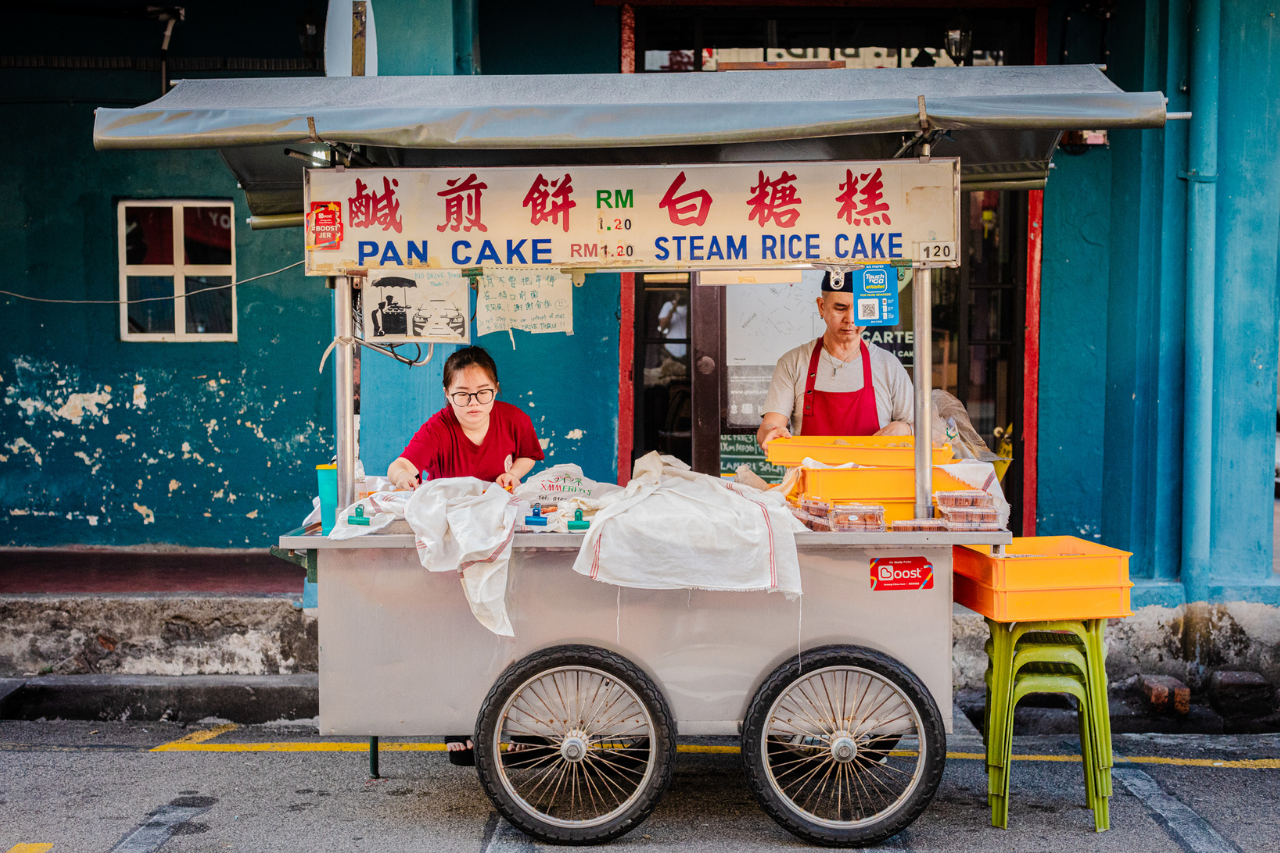
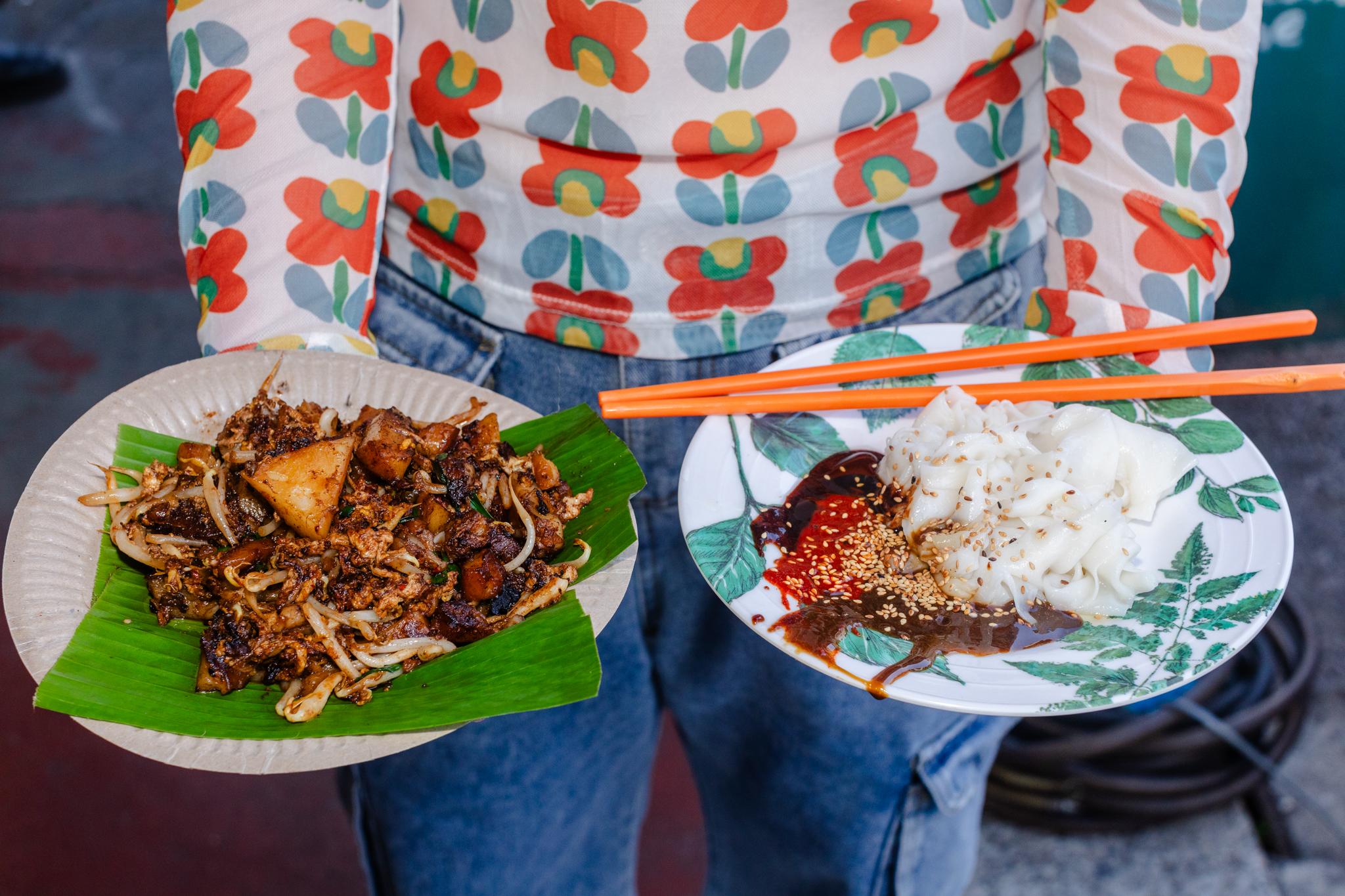
George Town's hawker economy feeds half a million people daily from fewer than two hundred stalls, many occupying the same five-foot-way pitch their founders claimed in the nineteen-fifties. The UNESCO recognition in 2008 froze rents on a dozen heritage lanes, locking in the price of char kway teow at four ringgit and preserving a culinary landscape that might otherwise have gentrified into extinction. What survives is not a museum but a working kitchen, where third-generation vendors still pull laksa broth at four in the morning and granddaughters inherit wok technique alongside the family recipe for lor bak spice paste. Penang's street food ecosystem operates on a logic older than tourism. Hokkien, Teochew, Cantonese, and Tamil communities each claimed their own corner of George Town's pre-war gridwork, and the food they sold encoded migration routes, poverty economics, and the improvisation required when you lack a stove. Char kway teow was invented to use up yesterday's flat noodles. Assam laksa turned mackerel trimmings into soup. Rojak married fruit waste with shrimp paste because nothing could be thrown away. These dishes were never artisanal; they were solutions. But time and repetition have refined them into something closer to vernacular art, and the Penang street food tour market now moves fifteen thousand visitors a month through the same lanes where dock workers once lined up for breakfast. The architecture of a hawker center is as deliberate as its menu. Stalls face outward, so the cook's hands are always visible. Seating is communal, so strangers share tables and negotiate condiments. Vendors specialize to the point of obsession: one stall serves only oyster omelets, another only cendol, a third only apom balik, the pandan pancake stuffed with peanut and sweet corn that appears on no tourist map but sells out by noon. This degree of focus is economic survival dressed as craft. When your stall is two meters wide and your competition is next door, excellence is not optional. The food itself is a record of colonial labor flows and entrepôt economics. Penang's port imported Sichuan peppercorns, Keralan curry leaf, Javanese palm sugar, and Burmese tamarind, and the street cooks used all of it. The result is a cuisine that tastes neither Chinese nor Malay but specifically Penang: sour, sweet, and umami-forward, built on burnt garlic, fermented shrimp, and the kind of chili heat that clarifies rather than obscures flavor. A Penang street food tour tickets booking puts you in front of fifteen to seventeen tastings, each one a two-minute lesson in how scarcity and plurality can produce something neither culture could have made alone.

"Char kway teow was invented to use up yesterday's flat noodles, assam laksa turned mackerel trimmings into soup, and rojak married fruit waste with shrimp paste because nothing could be thrown away."
A step-by-step walkthrough of the visit — what you'll see, how long each stage takes, and the details that matter.
You meet your guide at the Chew Jetty end of Pengkalan Weld, where the morning fish market is breaking down and the first hawker carts are rolling into position. The first stop is a Hokkien mee stall that has occupied the same corner since 1962, and you watch the vendor torch prawns in pork fat before drowning them in a dark soy slick that tastes like the ocean reduced to syrup. You eat standing, because there are no chairs, and because the next stall is twelve meters away. The walk continues through Kimberley Street, where the duck koay teow vendor ladles broth from a pot that has simmered since dawn, and into the Pulau Tikus market, where you try apom balik hot off the griddle and cendol shaved over palm sugar and kidney beans. Your guide explains the difference between assam laksa and curry laksa, then proves it with back-to-back tastings at two stalls that have been arguing over the correct recipe for thirty years. You pause at a Tamil banana-leaf stall for dosai and fish-head curry, then cross into the Hokkien quarter for lor bak, the five-spice pork roll that is somehow both delicate and aggressively porky. By the time you reach the final tasting — a bowl of cendol or a square of kuih — you have crossed four dialect groups, eaten from seventeen stalls, and understood that Penang's culinary heritage tours are not about restaurants but about the people who have been cooking the same dish, in the same spot, for longer than most chefs have been alive.
The operating hours for exploring the city are 00:00–23:59 daily.
Yes, the entrance fee is 0 MYR as you purchase food directly from individual stalls.
The best arrival window is 08:00–20:00 to align with peak vendor activity.
Yes, most tours are family-friendly, though please check specific route details.
Yes, cancellation policies for your penang street food tour tickets are outlined at the time of booking.
Carry small denominations of cash, water, and sun protection on your Penang street food tour.
Dress comfortably for tropical weather, prioritizing walking shoes.
Items like drones and large tripods are generally prohibited on the tour.
Yes, you can easily visit landmarks like the Clan Jetties near your penang street food tour.